

If someone had said to me before seeing this show, “You’ll actually care about Gatsby and Daisy,” I might have laughed, poured another wine and reminded them: I just don’t feel The Great Gatsby. I’ve always found Fitzgerald’s world — motivated by dizzying wealth, private jets of champagne and private islands of pain — utterly beautiful but distant. The characters are dripping in excess; they’re breathing gold-leaf dreams and historically I have sat in the audience, kind of shrugging and thinking, “Cool party. Great fashion. But I still don’t care about any of them.”
And yet, friends, this production changed my mind.
Adapted by Daniel Evans and Nelle Lee (and a long-awaited co-production between Queensland Theatre Company and Shake & Stir) this version doesn’t just put Gatsby on stage, it lives in his world. The narrative, usually a kind of shimmering mirage for me, becomes a story that genuinely feels felt. It doesn’t attempt to reinvent Fitzgerald’s story so much as rehumanise it. The scaffolding is familiar. The longing is still there. The wealth still glitters. But the emotional stakes feel closer to the surface, less ornamental and more urgent.
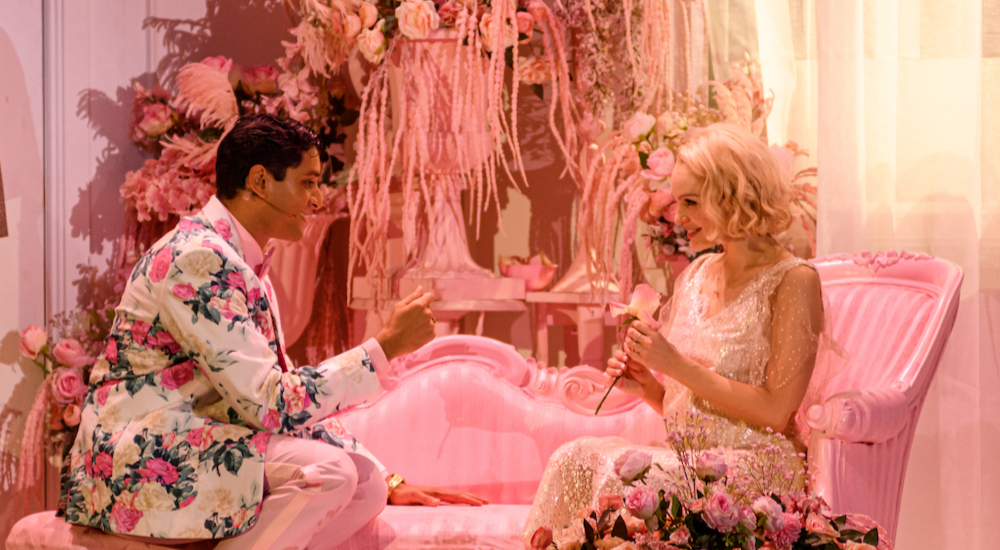
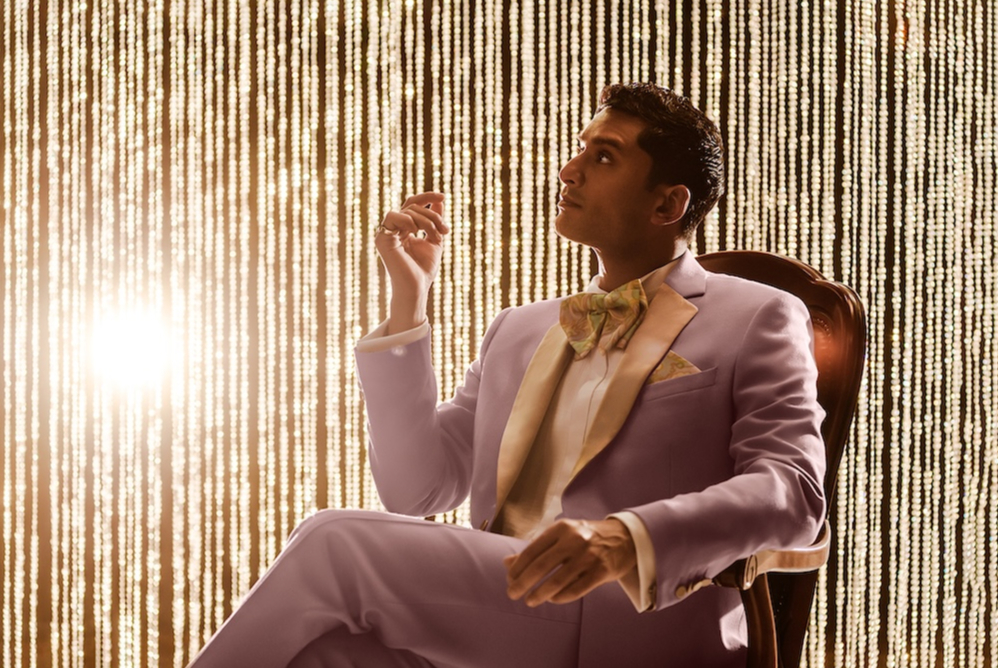
Shiv Palekar plays Jay Gatsby with a nervous, almost brittle vulnerability that shifts the character away from suave mystery and towards something far more recognisable. This Gatsby is tightly wound. He feels like a man performing confidence rather than inhabiting it. There’s a restless energy under everything he says, as though he’s constantly bracing for the illusion to crack. Instead of admiring him from afar, I found myself wanting to protect him. It’s a dangerous choice — softening Gatsby risks diminishing his myth — but here it makes him heartbreakingly human.
Opposite him, Jess Vickers gives us a Daisy who is far less frivolous than we’re used to. She’s still a kept woman, still cushioned by privilege, but this portrayal allows us to see the machinery around her. There’s a sense that she isn’t malicious or even particularly calculating, she’s simply not equipped for the speed and brutality of the world she inhabits. In this version, Gatsby is not just a nostalgic indulgence. You can see that she cares for him. You can also see that she cares for Tom in her own complicated way. That duality makes her choices more tragic and less dismissible. For once, I felt sorry for Daisy instead of exasperated by her.
Jeremiah Wray’s Tom Buchanan is exactly as imposing as he needs to be. When he enters, the air shifts. He doesn’t shout for dominance; he simply assumes it. The hyper-masculine bluster is there, but what’s more unsettling is the quiet entitlement beneath it. You believe that rooms part for him. You believe that people excuse him.
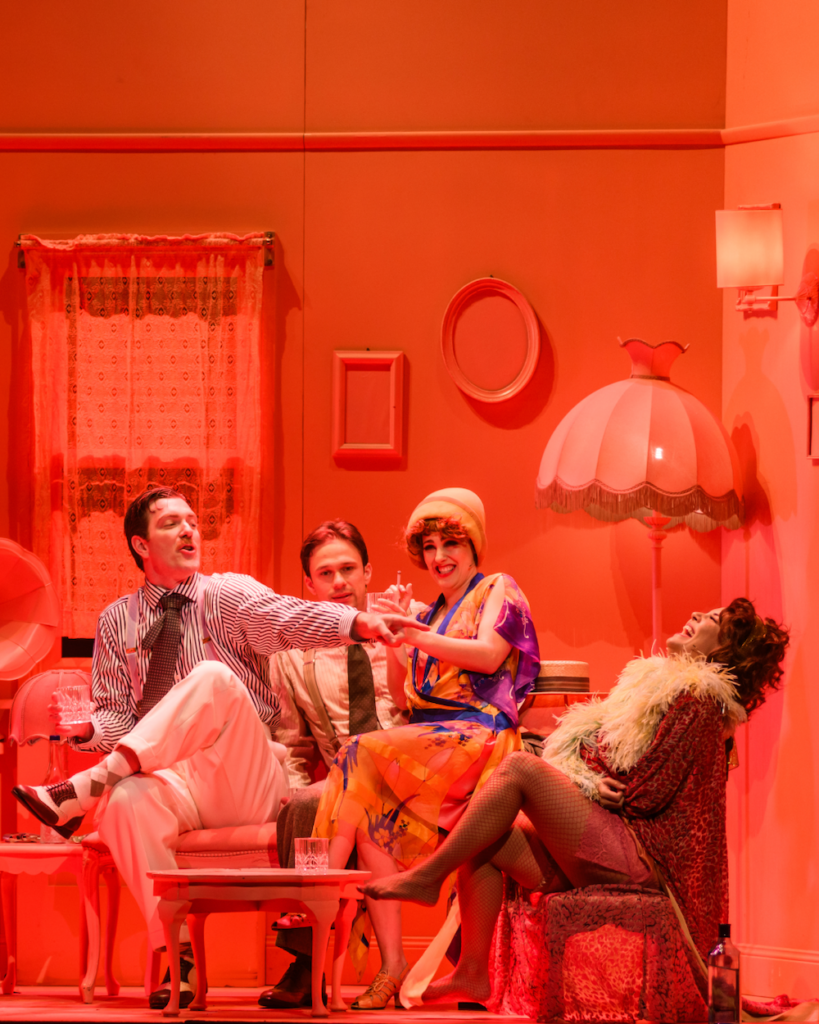
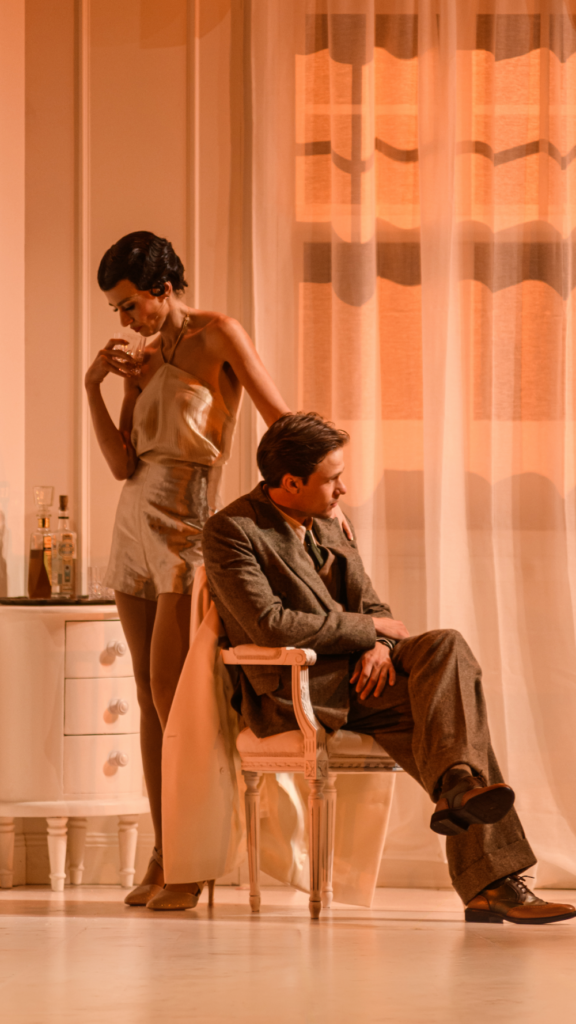
Nelle Lee, stepping onstage as Myrtle, brings a brash vitality that makes Myrtle’s hunger (for status, for pleasure, for more) feel painfully real rather than merely grasping. Libby Munro’s Jordan is sleek and self-possessed, but not emotionally remote. In her scenes with Nick, you sense a flicker of vulnerability she’s careful not to advertise. Munro doesn’t blunt Jordan’s independence or sharp edges; instead, she allows space for longing and disappointment to sit alongside them, which makes her feel less like a symbol of modernity and more like a woman navigating it in real time
And then there’s Nick.
Ryan Hodson plays Nick Carraway with an earnestness that borders on haunted. Nick is our way in; if he falters, the whole story drifts. Here, he doesn’t. His narration is steady and intimate, guiding us through the moral wreckage with a kind of quiet disbelief. He watches, absorbs, rationalises — and gradually realises he can’t remain untouched. It’s a thoughtful performance that keeps the story anchored even when everything else feels like it might float away.
The ensemble (Loren Hunter, Rachel Nutchey, Donné Ngabo, Ethan Lwin, Brigitte Freeme and Sean Sinclair) deserve more than a passing mention. They create the sense of scale and immense energy this story needs. The Gatsby parties feel populated and buzzing, not just theatrical representations. The energy in those scenes is infectious; you understand how someone could be seduced by that brightness and you feel like the room has a hundred people in it, not just a handful. And when the lights dim, the absence of that energy is just as palpable.
The incredible design elements do a great deal of storytelling work too. The parties are all shimmer and movement, but they never tip into parody. Romantic scenes have a hazy, glittering dreamscape quality, as though we’re watching memories rather than events. In the bleaker moments — the Valley of Ashes, the oppressive heat of that pivotal summer day — the atmosphere tightens. You can almost feel the humidity pressing in. At one point, Gatsby fills Nick’s modest apartment with flowers for Daisy, and it’s so visually lush you half expect to catch their scent.
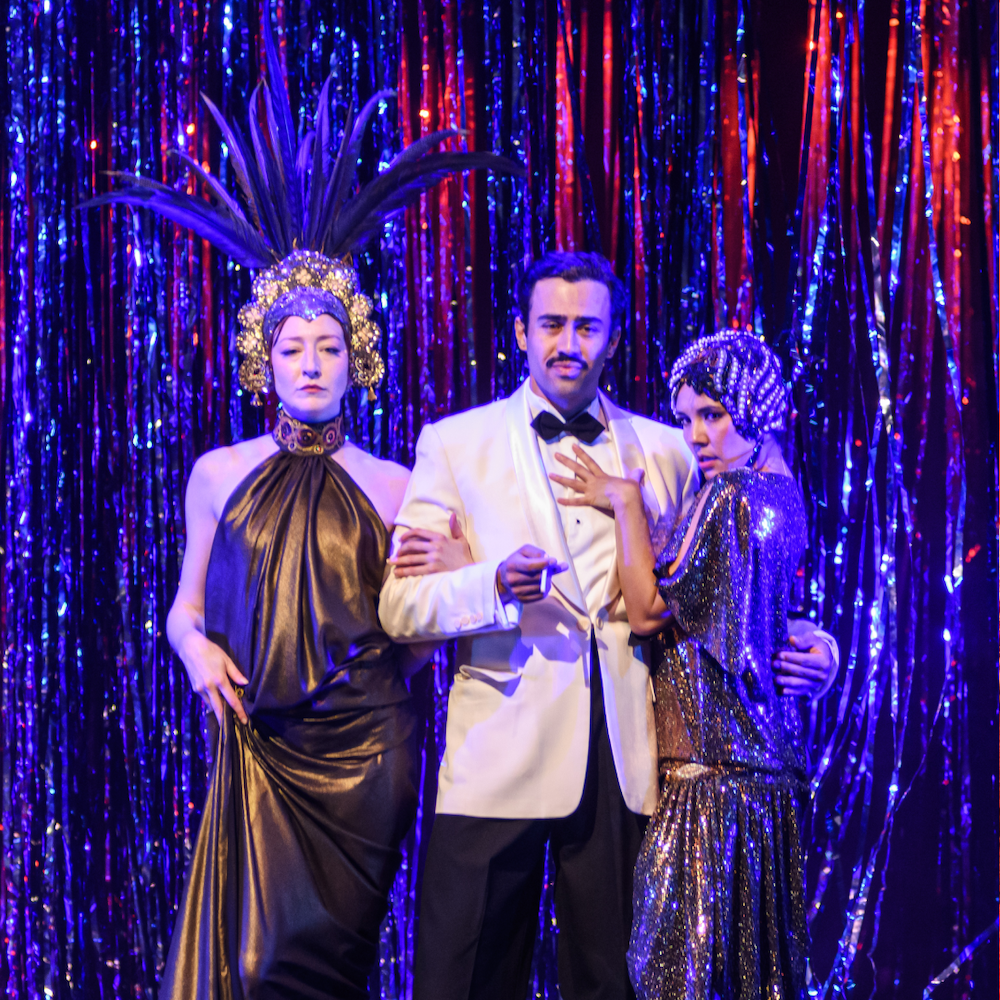
I still have my broader reservations about The Great Gatsby as a story. It remains, at its core, a tale of people cushioned by wealth making catastrophic choices. That distance doesn’t vanish entirely. But in this production, the emotional currents are stronger than the spectacle. The longing feels specific. The damage feels earned.
This is the best stage adaptation of Gatsby I’ve seen. Not because it’s the flashiest or the most radical, but because it made me care — about Gatsby’s fragile hope, about Daisy’s confusion, about Nick’s disillusionment. It found the bruises beneath the silk.
If you’ve ever felt a little cool towards this story, this might be the version that shifts you. It certainly did for me. And if you’re already devoted to this story, well, you’re in for a treat,
WHAT: Queensland Theatre Company and Shake & Stir’s The Great Gatsby
WHEN: Until March 8, 2026
WHERE: The Playhouse, QPAC
TICKETS: You can get your tickets to The Great Gatsby here.

In her spare time, she likes long walks down the makeup aisle and performing in Brisbane theatre. You can follow her adventures on Instagram and TikTok @thebeautypalate.

