

Jane Austen fans, prepare yourselves. The Dashwood sisters are back on the big screen in a new adaptation of Sense and Sensibility, directed by Georgia Oakley (Blue Jean) and adapted for the screen by Australian author Diana Reid. Starring Daisy Edgar-Jones as Elinor and Esmé Creed-Miles as Marianne, this latest take on Austen’s beloved novel has some formidable shoes to fill, particularly for those of us who have spent the past three decades adoring Ang Lee’s 1995 film starring Emma Thompson, Kate Winslet and Alan Rickman.
The story follows the Dashwood women after the death of their father leaves them financially vulnerable and forces them from their family home into a modest cottage in Devonshire. With their prospects suddenly uncertain, sisters Elinor and Marianne navigate the precarious business of finding love in a society where a woman’s future depends heavily on money, reputation and a suitable marriage. Elinor approaches life with careful restraint, while Marianne follows her heart with considerably less regard for the consequences. Both discover that matters of the heart rarely go according to plan.
As a die-hard Jane Austen fan who collects the books and has accumulated an assortment of memorabilia, I came to this film with considerable affection for the source material and a deep fondness for its predecessor. I was prepared to enjoy myself. I wasn’t quite prepared to find a new favourite.
So. Much. Yearning.
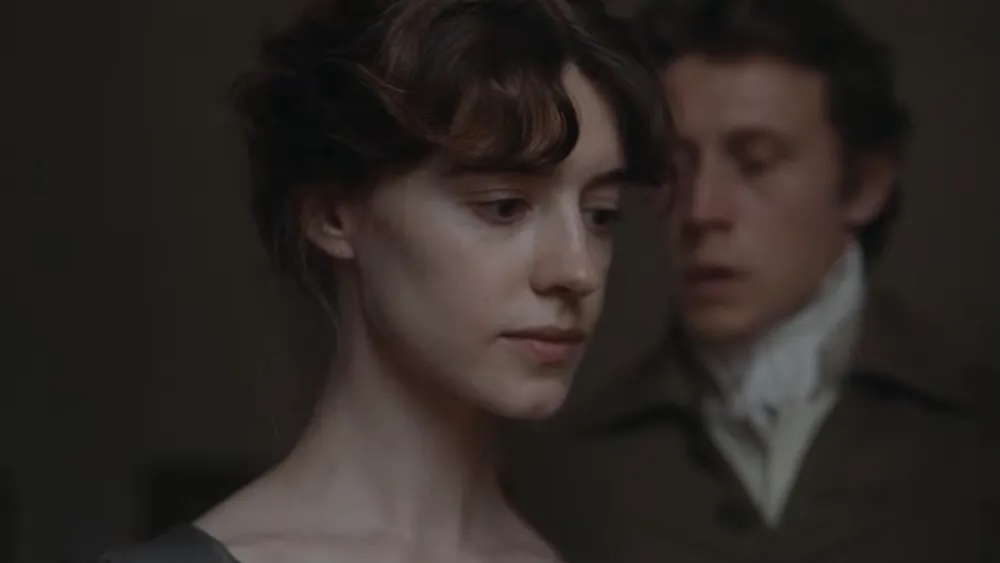
I yearn for this much yearning in my own life. Every longing glance, every feeling left unspoken, every agonising pause between two people who desperately want to say something and cannot quite bring themselves to do it. Austen knew how to make romantic restraint utterly compelling, and this adaptation understands the assignment. I found myself completely absorbed in the emotional push and pull, willing these characters to overcome their own reservations and get on with it already.
Daisy Edgar-Jones is magnetic as Elinor. Her performance captures the effort involved in maintaining composure when your inner life is anything but composed. Elinor has learned to keep her feelings in check, and Edgar-Jones gives us just enough of what lies beneath that restraint to make every fleeting expression count. She makes Elinor’s self-control feel like a genuine struggle, and I was utterly invested in what she could not bring herself to say.
Creed-Miles has a different challenge with Marianne, whose passionate belief in love can sometimes tip into territory that feels frivolous or naive. Her longing persists even when all seems lost, and it would be easy to play that conviction as youthful silliness. Instead, Creed-Miles gives Marianne a groundedness that makes her feelings entirely believable. Her romantic idealism has real emotional weight, and even when you want to tell her to exercise a little caution, you understand why she cannot simply switch off her heart.
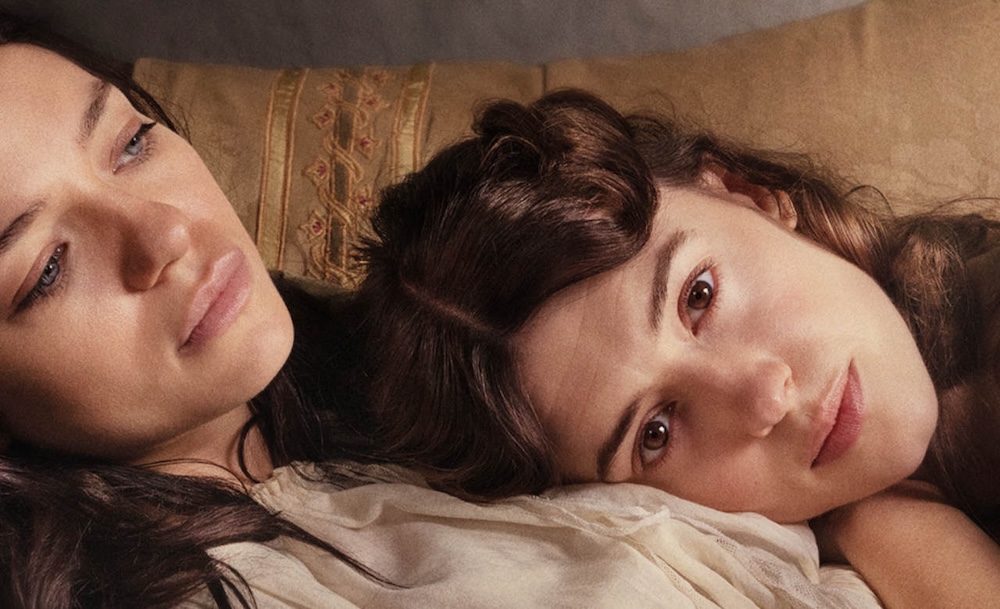
The contrast between the sisters is central to the story, but their relationship is what makes this adaptation so affecting. Their sisterhood feels strong and lived-in, with all the affection, frustration and familiarity that comes from knowing someone your entire life. Elinor and Marianne may approach the world differently, but neither is simply there to prove the other wrong. They are two young women trying to find their way through a society with very particular expectations of them, and their bond gives the romantic drama its heart.
There is also a terrific sense of humour running through the film. Austen’s social observations remain deliciously funny, and the comedy here feels wonderfully natural. Several moments caught me off guard, and I particularly appreciated how much the film allows its supporting characters to contribute. There are no small parts here. Even characters with relatively little screen time get a standout moment, whether through a perfectly timed line, an expressive reaction or a wonderfully awkward social exchange. I found myself chuckling throughout, and the ensemble gives the story a richness that extends beyond the central romances.
That balance of comedy and romantic anguish is a big part of what makes the film work for me. The characters can be ridiculous in one moment and genuinely heartbreaking in the next, often because their own feelings and social expectations have conspired to make a relatively simple situation impossibly complicated. The humour never undermines the emotional stakes. If anything, it makes the moments of yearning all the more affecting.
I had a very particular thought about 30 minutes into Greta Gerwig’s Little Women: “This is THE definitive Little Women.” It was the feeling that a filmmaker had found the version of a beloved story I would return to, the one I would recommend to anyone wanting to experience it on screen.
I had exactly the same experience here.
Ang Lee’s 1995 Sense and Sensibility remains a film I hold dear, and there will always be room in my Austen-loving heart for Emma, Kate and Alan. But this new adaptation has taken the story somewhere that feels definitive to me. The performances, the humour and, above all, the emotional connection between the Dashwood sisters (and their romantic interests) have made it the version I will be pointing people towards whenever they ask me which Sense and Sensibility they should watch.
For a film to take a story you already love and make you fall for it all over again is a rather wonderful thing. Georgia Oakley’s Sense and Sensibility has done just that, and I suspect I will be revisiting it whenever I need a reminder of how deliciously torturous falling in love can be.
Now, if you’ll excuse me, I have some yearning of my own to attend to.

In her spare time, she likes long walks down the makeup aisle and performing in Brisbane theatre. You can follow her adventures on Instagram and TikTok @thebeautypalate.
