
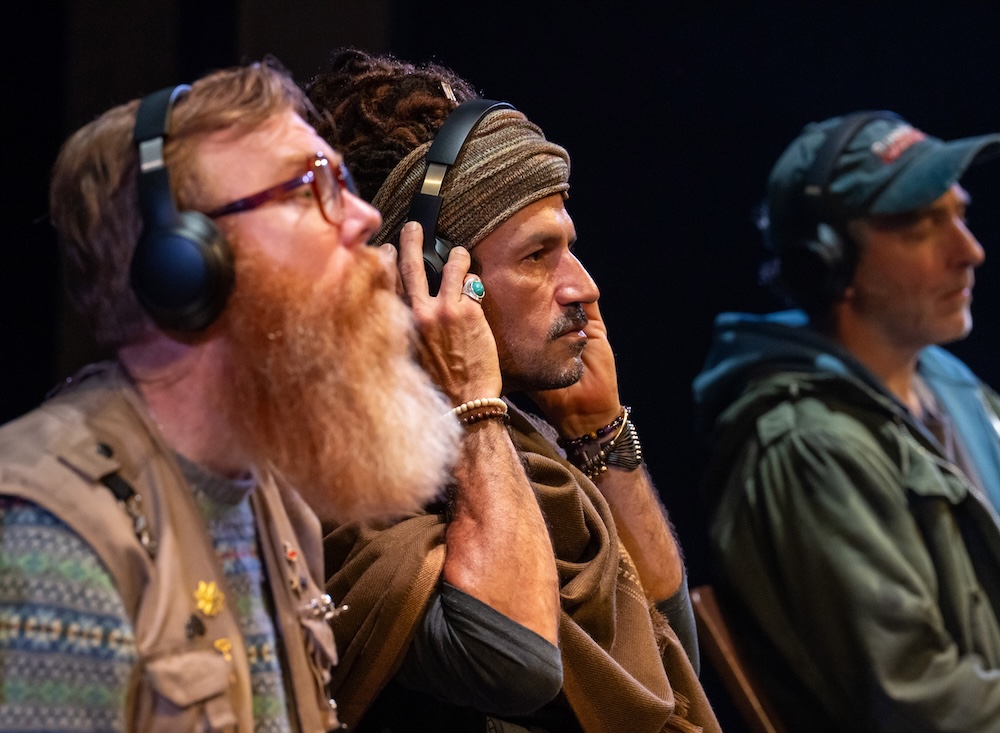
Watching six strangers navigate a silent retreat, it’s tempting to start piecing together their lives from the smallest gestures, expressions and glimpses of emotion. But how much of what we see belongs to them, and how much are we bringing to the story ourselves? Queensland Theatre Company’s Small Mouth Sounds, co-directors Bridget Boyle and Nathan Sibthorpe turn that question into a remarkable theatrical experience, using immersive sound design, inventive staging and performances that reveal a great deal without saying very much at all.
Written by American playwright Bess Wohl, Small Mouth Sounds follows six strangers who arrive at a silent retreat in the Australian bush, each carrying something they hope to work through. Under the guidance of a teacher, the group attempts to find peace through meditation and silence, but their individual struggles inevitably find ways to surface. With speaking largely forbidden, the retreatants must navigate their frustrations, grief, loneliness and attempts at connection through gestures, expressions and the occasional breach of the rules.
It’s a premise ripe for both comedy and pathos. The desire to improve ourselves can be a messy business, particularly when we’re forced to sit with our own thoughts rather than distract ourselves from them. What makes this production so remarkable, however, is the way its technical elements bring the audience into that experience.
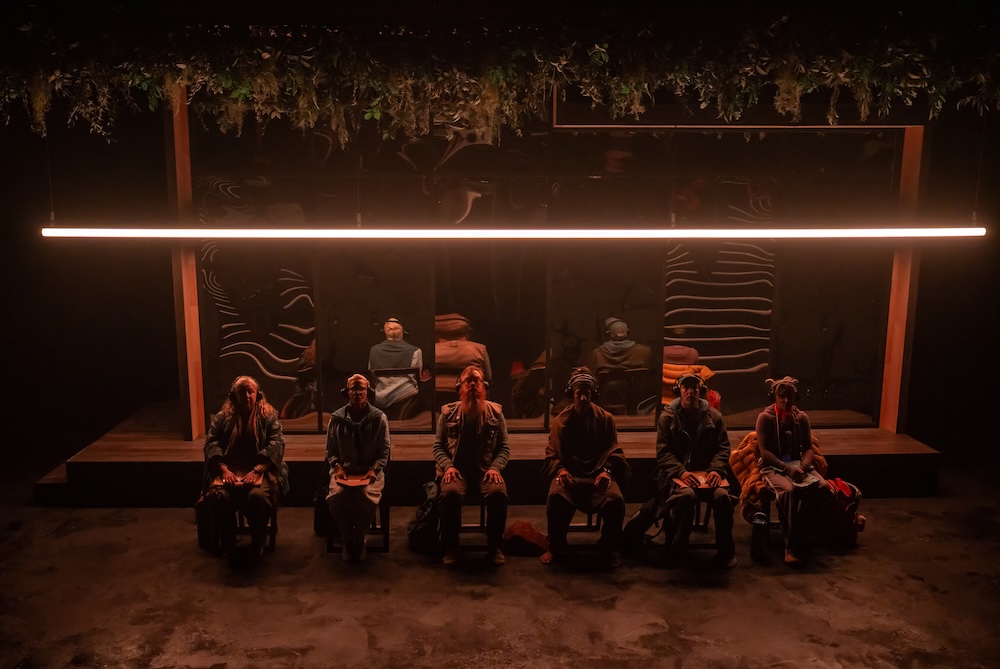
Counterpilot’s sound design is a triumph. Every audience member wears headphones, and we’re transported into the Australian bush through the rustling of trees, birdsong, flowing streams and splashing water, with rain and calming music also washing over us. The soundscape is so convincing that the environment feels tangible, placing us inside the retreat rather than simply observing it from our seats.
In Small Mouth Sounds, even the darkness has a part to play. Some of the blackouts stretch longer than anything I’ve experienced in a theatre, but rather than leaving us waiting for the next scene, they draw us deeper into the world of the retreat. The soundscape carries on, with the rustle of the forest, falling rain or calming music filling the headphones while hundreds of us sit together in the dark. With nothing to look at and no visual cues to draw us back to the stage, we’re left to simply listen. The darkness makes the experience feel both collective and deeply personal: we’re sharing the same sounds in the same space, yet each of us is alone with our own thoughts. There’s something profound about that temporary surrender of visual stimulation, when the usual expectation that theatre must give us something to watch falls away and we’re free to experience the moment on our own terms.
The technical precision required to achieve this whole show is extraordinary. The actors wear earpieces so they can hear the same audio as the audience, alongside microphones to capture their voices and live sounds. Their movements and choreography must be timed to prerecorded elements, demanding an exactness that makes the finished production all the more impressive. The occasional words spoken on stage blend seamlessly with the soundscape, while the actors’ physical performances remain perfectly synchronised with the audio.
Isabel Hudson’s set design is equally masterful. At the centre of the stage is a cabin with mirrored windows that initially conceal its interior. When the lighting changes, however, those reflective surfaces become transparent, revealing exactly what’s happening inside. The effect is simple but ingenious, allowing the cabin to shift between a place of privacy and one of exposure.
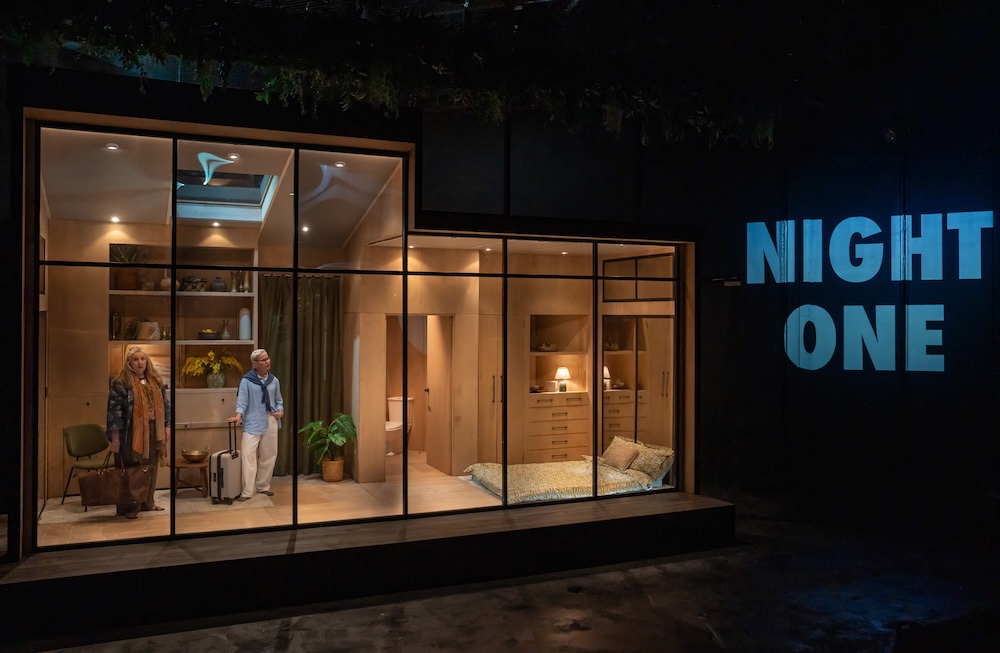
With so little dialogue, we’re left to piece together the retreatants’ stories from what we observe. We see a reaction, a gesture or a moment of distress, then instinctively start constructing an explanation. Our own experiences become the missing context. Someone who has experienced estrangement might see regret in a character’s actions, while another audience member might imagine an entirely different story. The play leaves room for both interpretations, reminding us how readily we fill in the gaps when we don’t have the full picture.
The entire cast deserve, including The entire cast, including Louise Brehmer, Stephen Geronimos, Judy Hainsworth, Kieran Law, Jodie Levesconte, Barbara Lowing and Anthony Standish, deserves all the applause for the concentration and physical control this production requires. With dialogue so sparse, every look, movement and reaction matters. The performances are carefully judged, allowing the humour to emerge naturally while giving the characters’ underlying pain room to register.
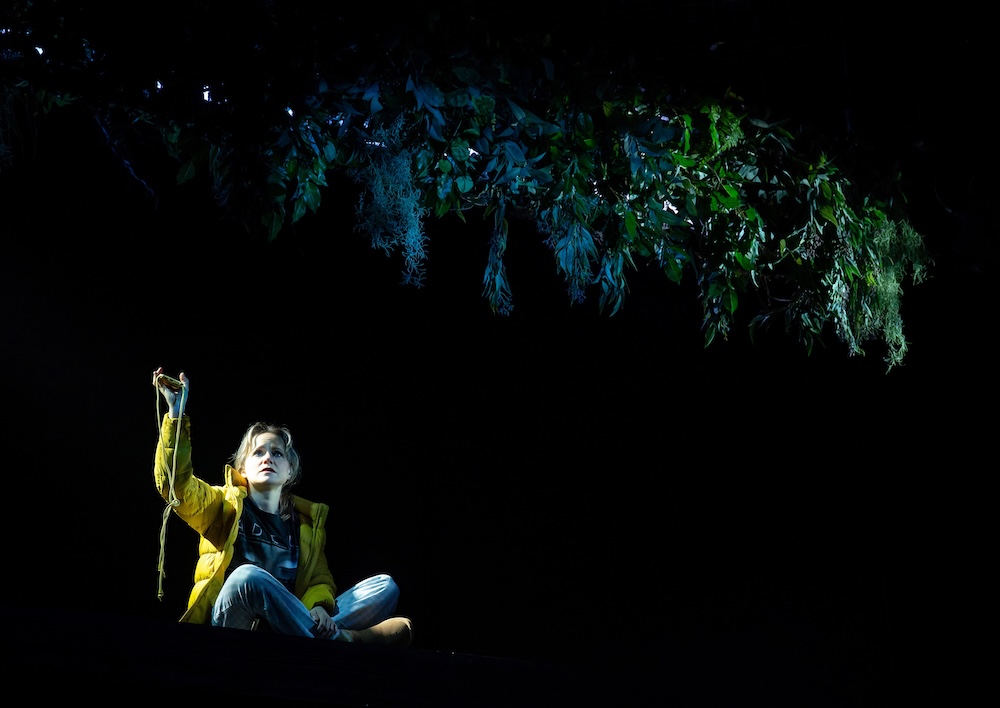
Judy Hainsworth delivers one of the production’s most affecting performances in a rooftop scene in which her character, Alicia, attempts to contact someone outside the retreat on a contraband phone. I found myself trying to work out who she was calling and what she hoped to resolve. Was she seeking forgiveness? Trying to repair a relationship? Hoping someone would finally understand her? We don’t know and we’re left confronting our own assumptions, drawing on our personal experiences to make sense of her desperation. When Hainsworth’s character releases a silent scream, the anguish is palpable. I didn’t need to know the details of Alicia’s story to recognise the pain of reaching for another person and not knowing whether you’ll ever bridge the gap between you.
Anthony Standish is another standout as Ned, whose talkative nature makes the retreat’s rules a particular challenge. There’s an inherent comedy in watching someone who has so much to say struggle to settle into silence, and Standish makes the character’s resistance both funny and recognisable. His performance captures the discomfort of having familiar coping mechanisms taken away, while the rest of the ensemble demonstrate just how much can be communicated through the smallest gestures and changes in expression.
Small Mouth Sounds is an extraordinary reminder of what live theatre can achieve when every element works in service of the story. The sound design is immersive, the set is ingenious and the performances are finely tuned, but what stayed with me most was the experience of sitting in darkness with hundreds of strangers, listening to the same rain, the same birds and the same stretches of silence.
We arrived as individuals, each with our own thoughts and experiences. For a few moments, we shared something without exchanging a word or even seeing one another. It was a fitting experience for a play about the difficulty of understanding other people, and a reminder that connection can begin long before we know someone’s story.
Unmissable theatre, and a production that will make you listen a little more closely to the world around you.
WHAT: Small Mouth Sounds, Queensland Theatre Conmpany
WHEN: Until November 1.
WHERE: Bille Brown Theatre, South Brisbane.
TICKETS: Get your tickets to Small Mouth Sounds here.

In her spare time, she likes long walks down the makeup aisle and performing in Brisbane theatre. You can follow her adventures on Instagram and TikTok @thebeautypalate.
